
Article at a glance:
By the end of this guide, you’ll understand what ketosis is, how to achieve it, what to eat (and avoid), how to handle keto flu, and how to track your progress — all in plain English.
Here’s what you’ll learn:
- The Basics of Keto:
- Understand the fundamental principles of the Ketogenic diet, including what ketosis is, how it works, and why it’s beneficial.
- Getting Started:
- Learn how to prepare for your Keto journey, from pantry essentials to grocery shopping tips, ensuring you have everything you need to succeed.
- What to Eat and Avoid:
- Discover the delicious foods you can enjoy on Keto and the ones you should steer clear of, complete with easy-to-follow meal plans and recipes.
- Overcoming Challenges:
- Gain insights into common hurdles like the “Keto flu,” cravings, and social situations, with practical solutions to keep you on track.
- Tracking Your Progress:
- Find out how to monitor your progress, adjust your plan as needed, and celebrate your Keto milestones.
Introduction
Embarking on a new dietary journey can be overwhelming, especially with all the conflicting information out there. But transitioning to a healthier, more vibrant you can be both simple and enjoyable.
You’ve heard “keto helps you lose weight fast without starving yourself”. But between the ‘keto flu,’ macro counting, and confusing advice – where do you actually start?
Welcome to **“Keto Made Easy”** — your complete guide to mastering the Ketogenic diet with confidence.
This guide is designed for:
- – Those who are new to keto
- – Anyone considering giving it a try
- – Beginners ready to take their first steps into low-carb, high-fat living
By the end, you’ll be equipped to start your keto journey with clarity and you’ll know exactly what to eat, what to avoid, and how to feel good while your body switches to fat-burning mode.”
Quick Start
- Eat < 50g carbs/day (ideally 20–30g)
- Get 70% of calories from fat
- Test ketosis after 3–5 days
Join us as we simplify the complexities of the Ketogenic diet, providing you with the tools and knowledge to make your transition smooth and successful. Whether you’re seeking weight loss, improved health, or simply a new way of eating, “Keto Made Easy” is here to guide you every step of the way.
Get ready to embrace a new, healthier you with confidence and ease! Let’s dive in…
What is the Keto Diet…?
The Ketogenic Diet is a weight-loss strategy that encourages the body to burn fat for fuel instead of sugars. Keto diet beginners’ guide has all the information you need to get started.
The goal with keto is to push your body into a natural state of ‘Ketosis’, by limiting the number of carbs you consume.
At this point, your body naturally starts to turn fats into ‘ketones’, (little power packs produced in the liver) and uses these to burn for the energy you need.
The results are;
- Your body burns fat.
- You feel more satisfied.
- You lose weight quickly.
- Enjoy increased focus.
- Increased energy.
- Better mood.
Low-carb diets can appear both complicated and time-consuming at first, but once a basic understanding of how they work is grasped, the rest is easy.
How Does the Keto Diet Work…?
Your body uses two types of fuel for the energy you need… which it gets from:
- The foods you eat.
- All the food you eat is made up of a combination of Protein, Carbs, Fat, and all too often, an unhealthy amount of non-natural preservatives, flavourings, and sweeteners.
- Stored Fats.
- Whatever your body is storing that you have not used up. (Fat)
The Role of Carbs in the metabolic process.
Your body takes any Carbs you eat…Wheat & Grains, (think Pasta or Bread) and Sugars…and converts them into Glucose that you use as energy.
This process, whilst supplying you with the bursts of energy you need, also causes a blood sugar spike, signalling the production of ‘Insulin’ from the Pancreas and remove excess glucose from your bloodstream and avoiding the danger of too much glucose in the blood…
The released Insulin works to remove the Glucose from your bloodstream to use as energy… and what you don’t use…is either stored in the Liver or the Muscles as Glycogen… and the rest is stored as Fat.
On keto: By limiting carbs, you lower insulin, stop storing new fat, and unlock your body’s ability to burn existing fat.

Need more information on Keto and Diabetes?
or
Medical advice for those with daibetes… WebMD
The Four Types of Ketogenic Diets
All keto and low-carb diet plans are individually personalised based on factors such as, age, current weight, current activity levels and underlying health.
Broadly speaking, Ketogenic diets fall into one of 4 categories that generally cover most considerations and weight-loss goals.
High protein ketogenic diet (HPKD)
This is similar to a standard ketogenic diet, but includes more protein.
The ratios are more like 60% fat, 35% protein, and 5% carbs.
The standard ketogenic diet (SKD)
This is a very low carb, moderate protein and high fat diet.
Typically containing 70% fat, 20% protein, and only 10% carbs.
Cyclical ketogenic diet (CKD)
This diet involves periods of higher carb re-feeds…
such as 5 ketogenic days followed by 2 high carb days.
Targeted ketogenic diet (TKD)
This diet allows you to add carbs around workouts and exercise routines.
For sporty lifestyles where more controlled carb/fat intake is required
How to Achieve Ketosis
Controlling the carbs intake is key…
Ketosis is simply the name for the metabolic process that occurs when the liver is producing ‘Ketones’ from fat and the body is burning fat for energy instead of converting carbs into glucose.
What is Ketosis…? (WebMD)
Replacing and limiting the proportion of carbs you eat whilst increasing your consumption of fats and including enough proteins will do the trick.
Activity levels, age, sex, current weight, weight-loss goals make everyone’s specific Calorie requirements different…and to succeed at Keto, your calories need to be balanced out to the correct proportions of ‘Macronutrients’ or ‘Macros’.
Check out our Keto Macro Calculator – Find out YOUR nutritional macros for a successful Keto Diet.
Testing for Ketosis
There are several good testing kits available for checking on ketosis – or checking Ketones.
Some are simple testing strips that test the urine for ketones and PH levels.
Others can test the breath for signs and levels of Ketones.
And then there are more medical tests that analyze blood sugars… These are mainly used by those with diabetes, who need to monitor blood sugars much more carefully.
See: Diabetes & Keto
Benefits of the Keto Diet

Health Benefits
Your body is now burning the Fat you eat for energy, but it’s also burning any stored Fat.
And… Because you are no longer spiking your blood sugar with Glucose… your energy lasts much longer with no ‘crashes’.
- Increased energy
- Improved levels of cholesterol
- Improved circulation and blood pressure
- Better ability to focus
- Can help with some types of Diabetes
- Reduced cravings
- Weight-loss
Further reading for the health benefits of the Ketogenic Diet…>>
Keto Flu
Commonly referred to as ‘Keto Flu’, there are a few well documented signs that your body is producing ketones… particularly in the early stages of ketosis, whilst your body adapts to the changes in your metabolism, some side effects can appear.
Most are very short-term and can be easily remedied, whilst some will clear up on their own as your body acclimatizes.
Here are the most common symptoms and some tips for relief…
| Symptom | Cause | Quick-Fix |
|---|---|---|
| Muscle Cramps | Decreased Electrolytes | Electrolytes + water |
| Sleep Disturbance | Energy changes | Stabalizes itself in a few days |
| Headaches | Carbs withdrawal / dehydration | Electrolytes + water |
| Upset Stomach | Change in digestion | Water and high-fiber foods – (Pro-Biotics) |
| Fatigue & Weakness | Body switching fuel source | Rest + salt intake |
| Bad Breath | Ketones exiting via breath | Sugar-free gum (temporary) |
Muscle Cramps
(Normally a result of decreased electrolytes.)
First off, load up on electrolyte-rich foods like leafy greens, avocados, nuts, and seeds. They’re packed with those essential minerals you need. And, if you’re still feeling a bit off, there are electrolyte supplements and drinks designed just for keto diets. They’re like little magic potions that can help you get back in balance. Drink plenty of water.
Ketogenic Diet Plans should provide enough electrolytes, (Calcium, Magnesium, Potassium, and Sodium), but again, there are supplements and electrolyte drinks to help.
Sleep disturbance
Again, the change in diet and energy can cause difficulty falling asleep or can wake up at night.
This should also clear up in a couple of weeks.
Headaches
Relatively normal in the early stages of the Keto diet, headaches may be caused by the sudden reduction in carbs, (especially sugars) and dehydration / reduced electrolytes.
These should ease within a few weeks and the consumption of water/electrolytes should help with the dehydration.
Upset Stomach
Drink plenty of water to keep things flowing smoothly. And when it comes to food, opt for high-fiber options like veggies and nuts. They’ll help your digestion do its thing. Oh, and here’s a secret weapon: pro-biotics!
These little dudes promote a healthy gut and can make a world of difference. So consider adding them to your daily routine. Give your stomach some time to adjust, and once it does, you’ll thank yourself for pushing through.
Fatigue & Weakness
(Normally felt in the early stages of a Keto diet due to the switch between Carbs & Fat.)
It’s like your body’s way of saying, “Hey, what’s going on with all these carbs disappearing?”
When you switch from burning carbs to fat for fuel, your body needs time to adjust. But fear not, there are ways to power through it. First, make sure you’re getting enough electrolytes.
Remember those minerals like calcium, magnesium, potassium, and sodium we talked about? They’re like little energy boosters that can help you feel less lethargic.
Also, give yourself a break and take it easy during this transition period. Your body is working hard to adapt, so don’t push yourself too hard.
And last but not least, be patient. In a few weeks, your energy levels will bounce back like a superhero on a mission. So keep your chin up, stay hydrated, and before you know it, you’ll be kicking butt on the keto diet with all the energy you need!
Bad Breath
Unfortunately one of the most common symptoms of Ketosis is bad breath.
This is because ketones can exit the body through the breath as well as the urine.
Many people chew sugar-free gum to mask this – but apart from that, there is not much to be done for this one…
What foods can you eat on a Keto diet?
Some food types will just not work for the Keto diet… however, there will be foods that are perfect because of their nutritional content.
Since the aim is to control the amounts of Carbs, Proteins and Fats, foods with measurable amounts of these allow for carefully managing the values of each…

Proteins
Depending on the type of Keto Diet you’ve chosen, your Protein intake should make up between 20% – 35% of your daily calorie count.
Proteins should come mostly from fatty sources, (80%).
Eggs, bacon, pork, steak, ground beef, and lamb.
With the remaining 20% from cheese, chicken, nuts, and fish.
Fats
Central to the Ketogenic Diet, a lot of your fat intake can be easily linked to your protein intake because foods like Eggs, Fatty meat, and Cheese will provide both.
But…
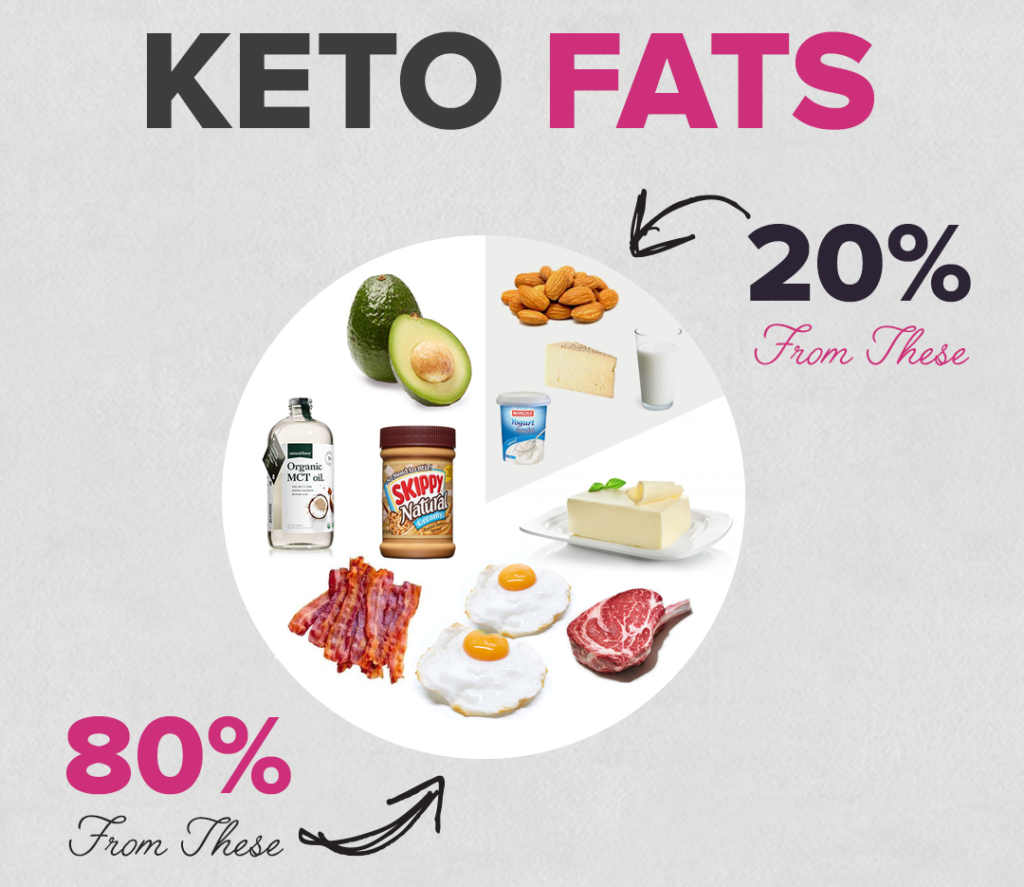
80% of your fat intake should be coming from healthy fat sources such as Avocado, MCT Oil, Macademia Oil, and Butter as well as from the fat found in your chosen meats or eggs.
Balance this with the remaining 20% coming from other fat sources like Chia Seeds, Milk, Flax Seeds, Nuts, Nut Butters, etc…
Just take care that with these fat sources, the Carbs can add up quickly.
Carbs
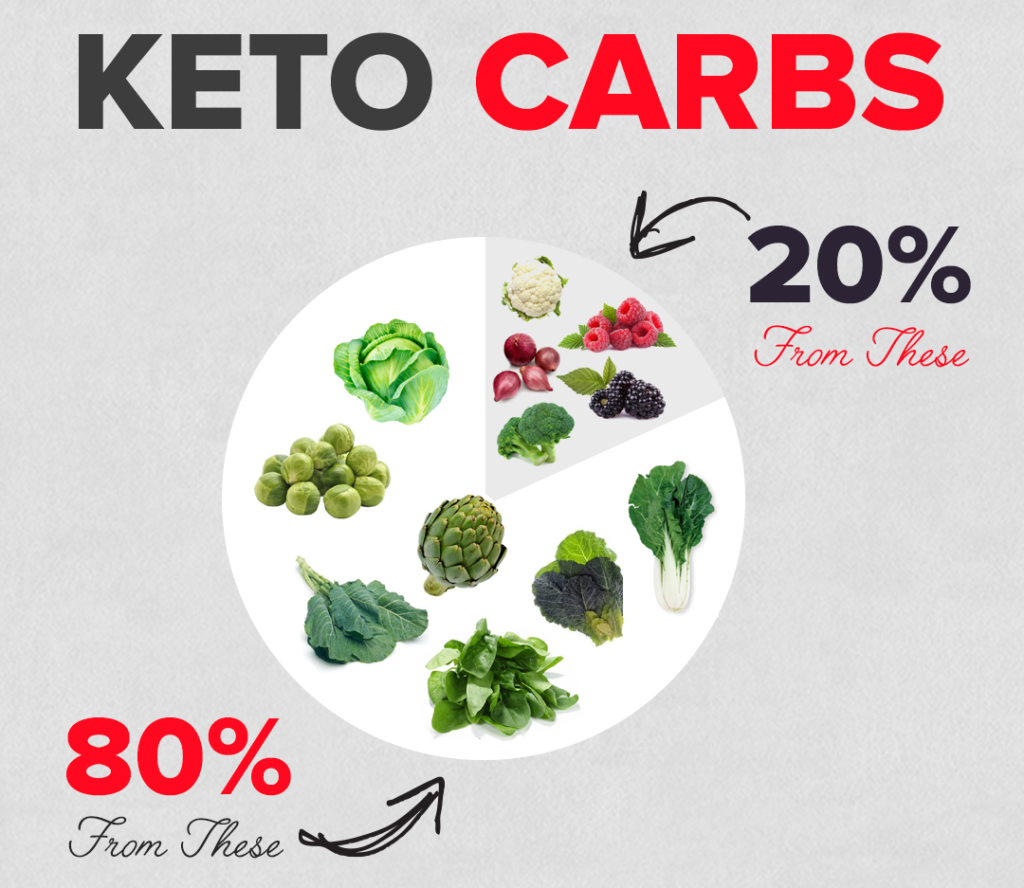
Leafy greens like Kale, Asparagus, Lettuce, Spinach, Chard, etc… all contain a lower percentage of carbs and so, should account for approx 80% of your Carbs.
The remaining 20% should come from more moderate-carb veggies such as Cabbage, Broccoli, Cauliflower, Yellow Onions, etc…!
Summary – Approaching Keto as a Lifestyle
It’s important to approach the Keto Diet as a lifestyle change rather than a quick fix. Several factors should be considered to personalize and optimize the keto diet for individual needs.
Factors including
- Age
- Gender
- Height and weight
- BMI (Body Mass Index)
- Personal fitness levels
- Daily activity
All need to be considered so that individuals can tailor their keto diet to achieve the desired results and maintain a healthy lifestyle in the long run.
Whether you ‘Go It Alone’ or opt for one of the many choices of pre-planned diet plans, you will need to consider a few things…
Get started today with the Keto Macro Calculator, then consider joining a personalized meal plan app…
Suggested next steps articles

Frequently Asked Questions
The trick to the keto diet is to control your carbohydrate intake, pushing your body into a natural state of ‘Ketosis’, where it burns fat for fuel instead of sugars.
The basic rules of a keto diet involve consuming high-fat, moderate-protein, and low-carbohydrate foods to induce and maintain a state of ketosis.
For beginners, the keto diet works by restricting carbohydrate intake to prompt the body to burn fat for energy, leading to weight loss, increased energy, and other health benefits.
The simplest way to do keto is to focus on consuming high-fat, low-carb foods while avoiding high-carb items like grains, sugars, and starchy vegetables.
Foods not allowed in the keto diet include high-carb items like grains, sugars, starchy vegetables, and processed foods.
This article explains this in more detail…
Coffee is considered keto-friendly, especially when consumed without added sugars or high-carb creamers.
We’re massive Coffee lovers here, so we use and recommend this great keto “
Lazy keto involves focusing primarily on restricting carbohydrate intake while being less strict about tracking other macronutrients like protein and fat.
Dirty keto refers to following a ketogenic diet while consuming primarily processed and low-quality foods, which may not be optimal for overall health.
Dirty Keto is explored here in greater detail…
The top 10 keto foods include fatty meats, eggs, cheese, avocados, nuts, seeds, low-carb vegetables, healthy oils, fish, and berries in moderation.
Our list of Keto Friendly Foods explores all of these in detail.
Starting a keto diet for beginners involves gradually reducing carbohydrate intake while increasing healthy fats and moderate protein consumption. It’s recommended to focus on whole, unprocessed foods and to stay hydrated. Consulting with a healthcare professional or nutritionist can also provide personalized guidance.
Rice is high in carbohydrates, making it unsuitable for a standard keto diet. However, there are low-carb alternatives like cauliflower rice or konjac rice that can be incorporated into keto-friendly meals.
Here are some great examples of using cauliflower rice as an alternative…
While many fruits contain natural sugars, some fruits are lower in carbohydrates and can be consumed in moderation on a keto diet. Examples include berries like strawberries, raspberries, and blackberries, which are relatively low in carbs compared to other fruits.
More information on keto friendly fruits can be read here…
To potentially accelerate weight loss while in ketosis, consider incorporating intermittent fasting, increasing physical activity, managing stress levels, and ensuring adequate sleep. Additionally, focusing on whole, nutrient-dense foods and staying hydrated can support weight loss efforts.
Following a keto diet may contribute to overall weight loss and reduction in abdominal fat for some individuals. However, spot reduction is not guaranteed, and results may vary depending on various factors such as genetics, lifestyle, and adherence to the diet.
Targeted fat loss, including stomach fat, can be challenging and may require a combination of strategies such as a balanced diet, regular exercise (including both cardiovascular and strength training), stress management, and adequate sleep. However, it’s essential to focus on overall health and well-being rather than spot reduction.
**Was this guide helpful?** Share it with someone starting their keto journey. 📌 Bookmark this page — we update it regularly with new research and recipes.